Historical Thinking as a Practice and a Discipline: Whether it is a “mind-altering encounter” (Wineburg et. al.), the “self-appropriation” (Levesque) of procedures for interpreting history, the decoding (Pace) or unpacking (Middendorf) of the discipline of history, or to go “against the grain on our thinking” (Wineburg), there seems to be a general consensus among the…
Nashieli Marcano’s Bio
Hello Everyone! As an academic librarian in the humanities and social sciences, I support students and faculty in their research and learning workflows. I enter these scholarly communities and contribute with my expertise in library collection development, online and face-to-face teaching and training, qualitative data analysis (e.g. NVivo, Atlas.ti), web design, and outreach programming. I’m…
“Territorio no incorporado”: Wrap-Up Report
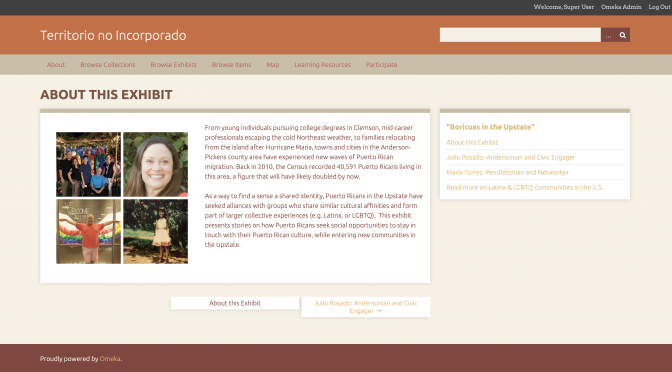
Introduction “Territorio no incorporado” is a small-scale, digital public history prototype developed to showcase the experience of Puerto Ricans in the Upstate region of South Carolina. Powered by Omeka, this site has been an invitation for DPH newbies like me to get a firm handle on the how to build a website, select and create…
“Territorio no incorporado” Portfolio Blog Post 3
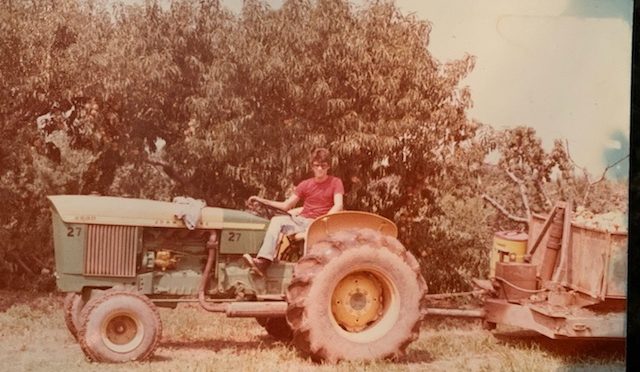
Progress: The Creation of the “‘How about them peaches?’: Puerto Rican Migration to the Upstate” Exhibit The “How about them peaches?: Puerto Rican migration in the 1970s” exhibit showcases life for farmworkers and their families in Sunny Slope Farms, Gaffney, South Carolina. This exhibit allowed me curate some photographs from Z.R. (contributor wanted to remain…
Exploring your Landscape with the Mobile Digital Public History Site “The Clio”
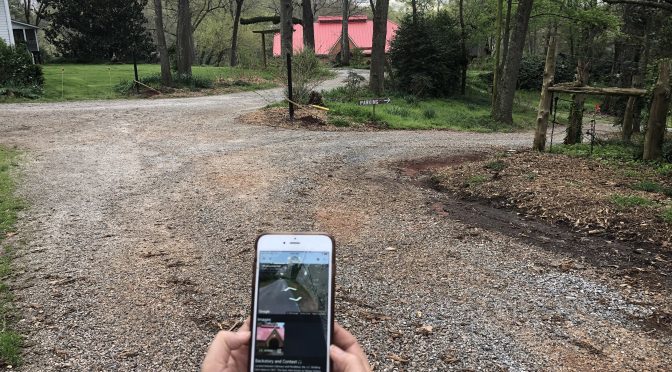
The Clio https://www.theclio.com/ Urban humanist, Mark Tebeau has examined the possibilities that mobile technologies offer to curators and historians as they reach out to audiences, stating: “Although humanists, including oral historians, have embraced these technological trends, sometimes slowly, broad publics have incorporated mobile computing into their daily lives.” (25) With the use of GPS, mobile…
“Territorio no incorporado”: Progress Report 3 (Module 7)
The “Territorio no Incorporado” platform is taking more shape with the creation of the new Exhibit: “Puerto Ricans in the Anderson-Pickens-Oconee County Area, Upstate South Carolina.” So far, this exhibit revolves around the story of Julio Rosado, an elite hairstylist living in the town of Anderson. Successes #1. The First Storyteller has Emerged This exhibit…
“Territorio no Incorporado”: Progress Reports 1-2
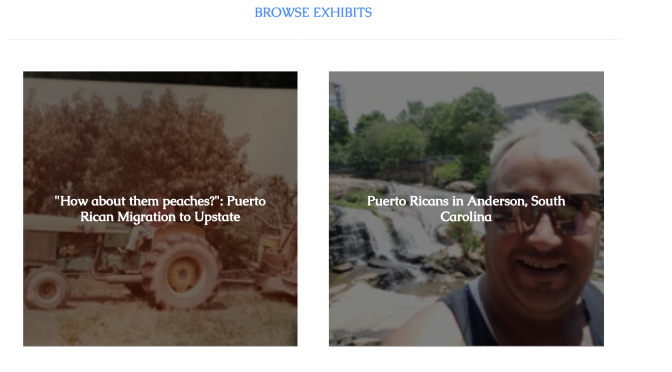
Throughout this phase in the creation of the “Territorio no Incorporado” prototype, I have experienced a series of successes and challenges. In essence, I have come to appreciate the many approaches to devising a cohesive plan for developing narrative interpretation and user workflows. Course readings and sample websites have provided me with interpretive lenses to…
Project Proposal: “Territorio no Incorporado”
Nature of Project Puerto Rican populations are in continued dispersion across state lines, flowing out of the largest Northeast urban regions and mid-size cities to the Southeast. With 117% growth, South Carolina has become one of the fifteen states with the fastest growth in Puerto Rican population in the past 20 years. The Upstate region in…
Digital Public History Project: Personas Revised
Persona 1: The Foodie-Traveler-Buddy Name: Julio Demographic profile: Julio is a 44-year-old, single, Puerto Rican-born male. He’s an educated, high-producing hairstylist at a salon in the Upstate. Quote: “I’ll pick a place I’ve never been in the Upstate, a Latino place. I’m always seeking new friends and good food” A Day in a Life Narrative: …
Audience-Content Relationships in Public History Projects
Paving New Digital Dialogic Pathways for Audience-Content Engagement The ultimate aim of designing a public history platform, such as “Territorio no Incorporado”, is to generate a dialogical and reflective virtual map that would help visualize the unincorporated nature of the Puerto Rican “territory”. Using this legal unterritoriality nomenclature as the framing device for the project…
