Purpose of this Audience-Research Project: As part of the design of the “Territorio no Incorporado” public history prototype online platform, I have collected data from interviews, which were held with two Puerto Ricans living in the Upstate region of South Carolina. This post elucidates some specificities regarding their demographical profiles, labor and leisure activities, interactions…
Comparative Review of Two Public History Exhibits by the Atlanta History Center: Cyclorama: The Big Picture (Physical) & More than Self: Living the Vietnam War (Digital)
Physical Exhibit: Cyclorama: The Big Picture Location: Atlanta History Center Historical Argument The overarching argument of The Battle of Atlanta 360° Cyclorama Exhibit was clearly displayed on a large screen, the moment visitors set foot on the exhibit space: “there are voices that are not heard”, “arts and entertainment promote myths”, and “The Atlanta History…
Audience-Content Relationships in Digital Public History Projects
The professionalization of the public historian and audience-content creation: A Tale of Two Fronts Scholars in the realms of public history agree on the complexities and debates involved in defining the concept public history. The lack of consensus as to what is and who does public history has proven to have direct impact over audience-content…
Nashieli Marcano’s Bio
Basic Information About me as a Student As a librarian, I consider myself a professional student, always motivated and with a question in mind. I am very adaptable and able to work independently, as well as in team settings. My approach to effective teaching is by actually being a student and absorbing the material to…

Doing Digital Humanities: A Reflection from a Newbie
Aim of EnRoutes With EnRoutes: Markers & Makers in 1900s’ Puerto Rico, I wanted to create a space where the audience can establish relationships with visualized images and annotations. I have great interest in how road system projects that took place in 1900s transformed social networks in Puerto Rico. In Puerto Rico, considered to be…
Social Media Strategy for EnRoutes
The EnRoutes Project En Routes: Markers & Makers in Early 1900s’ Puerto Rico will be launched as a space where audiences can establish relationships with images and literary text excerpts. I would like to share my interest in how road system projects that took place in 1900s transformed social networks in Puerto Rico. I envision…
Crowdsourcing Cultural Heritage: A Comparison of Four Cases
What is Crowdsourcing Cultural Heritage? Crowdsourcing is to take projects created by institutions or organizations and to outsource tasks to the general public. Wikipedia is the most well-known case of crowdsourcing. It typically involves a project generated by a museum, a library, an archive, or a gallery (GLAM). Project designers will digitize large amounts of…
A Librarian’s Approach to Reading a Wikipedia Article: The CRAAP Test
A. Introduction As an academic librarian, I always caution patrons about properly using different types of sources (popular vs. scholarly, peer-reviewed, grey literature, and news sources). With regards to Wikipedia, I don’t discourage them from going there, as I use it all the time. Wikipedia, as a successful crowdsourcing project, has been surrounded by controversy…
Review of Palladio
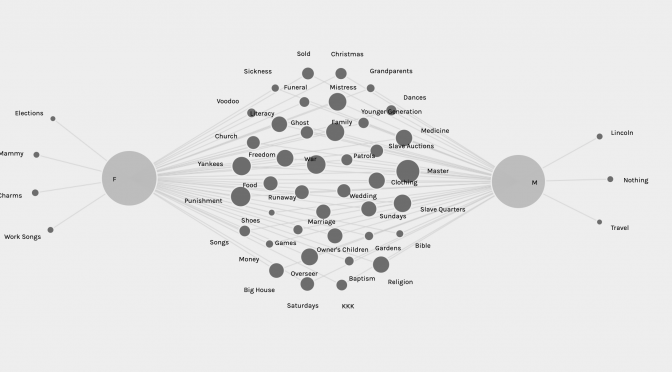
Palladio Review Palladio is a digital web tool that creates multidimensional visualizations of data. This tool helps users reveal complex hidden patterns and structures based on textual sources. Users can extract data related to individuals, locations, topics, among other types. In this case, I was able to visualize the different relationships one can establish with…
Voyant, kepler.gl, and Palladio: A Tale of Three Visualization Tools
Introduction There are web-based digital platforms that empower users to upload data and explore it with the generation of visualizations. These are free of charge and fairly easy to use. Tools like Voyant, kepler.gl, and Palladio help examine digital sources in very distinct fashions. Voyant, for instance, focuses on corpus analysis, kepler.gl will do mapping…
